
Culinary Sustainability
The upcycled food industry grows with new practices and offerings that reduce waste

Amanda Oenbring, CEO, Upcycled Food Association (Photo courtesy of Amanda Oenbring)
Claire Schlemme, who co-founded Boston's first organic juice company, remembers how jarring it was to see the mounds of pulp left in the kitchen after she made the beverages.
“Just seeing that inefficiency up close really made me want to think about how we can be more efficient with the nutrition that we grow and how we consume it,” says Schlemme, who later co-founded Renewal Mill, an Oakland, California, company that makes baking projects using the natural proteins and fibers derived from processing plant-based foods.
The idea for Renewal Mill came when, after leaving the juice business, Schlemme had what she calls “a really fortuitous conversation” with the owner of a tofu factory who was facing his own challenge with excess pulp from juicing soybeans to make soy milk. “It was a bonding experience over byproducts that led to the start of Renewal Mill,” Schlemme says.
Schlemme notes that the traditional industrial food system is linear: We grow food, process it and discard the leftover material. Each year, billions of pounds of edible byproducts are wasted, even as food insecurity and climate pressures grow. But innovative entrepreneurs like Schlemme and others are designing a more circular food journey by reimagining how to treat discarded ingredients: not as refuse, but as raw material for new, high-quality products.
This food upcycling, as it’s called, isn’t so much a new idea as a continuation of the “waste not, want not” philosophy our ancestors lived by. But today’s more professionalized food thrift has emerged as both an answer to the environmental problems that food waste causes and a creative, cultural and culinary movement that’s changing how we value food itself.
Why Upcycling Matters
Around the world, more than a third of all food produced for human consumption goes to waste, according to a study by the United Nations Food and Agriculture Organization. That amounts to about 1 billion tons and a loss of $1 trillion each year. The UN estimates that food waste and loss cause 8 to 10% of all greenhouse gas emissions, leading the nonprofit climate action organization Project Drawdown to name reducing food waste as the single greatest solution to climate change. Beyond its negative impact on the environment, food waste compounds the problems of nutritional deficiency and food insecurity.
Six years ago, the Upcycled Food Association (UFA) formed as a membership-based trade association with a mission to make the food system more sustainable. UFA members include food-related small businesses and multinational companies, students, marketing agencies and academic researchers.
“There's so much research going into this from academic institutions all over the world,” says UFA’s CEO Amanda Oenbring, who notes that a growing number of business leaders have joined the quest to find a better way.
The UFA-affiliated Upcycled Food Foundation held its Global Scientific Symposium in June 2025 — the association’s designated Upcycled Food Month — featuring presentations by 22 speakers from 10 countries. A second virtual symposium took place in September, launching on the International Day of Awareness of Food Loss and Waste.
At the most recent symposium, a major theme was “rescuing nutrition,” Oenbring says. One topic that generated a lot of interest was the overlooked nutritional value of the fruit pumice that remains from the making of juice and wine.
Schlemme, for whom juice pulp also sparked an interest in food upcycling, is a co-founder of UFA. For this article, she and three other entrepreneurial members of the association shared stories of their involvement in the cause.
Bread and Brownies from Plant Pulp
Schlemme’s company, Renewal Mill, turns byproducts from soy milk, oat milk and fruit processing into high-fiber, protein-rich flours. Green bananas and pineapple trimmings, for instance, are dehydrated and milled to make a shelf-stable powder. Besides selling the flours as standalone products, the company uses them in a line of baking mixes that currently includes brownies and two flavors of cookies and is expanding to offer vanilla and chocolate fudge cake mixes in early 2026. The fact that all Renewal Mill products are naturally gluten free is a key selling point, along with their other nutritional advantages.
For Schlemme, who has a master’s in environmental management from the Yale School of Forestry & Environmental Studies, it‘s important that Renewal Mill be able to demonstrate a measurable difference between manufacturing flour from upcycled ingredients and doing it the old-fashioned way. Using lifecycle analysis tools developed by the food waste think tank ReFED, the company has determined that it has already diverted more than a million pounds of byproducts from waste streams into the food supply chain.
Still, Schlemme is determined not to sacrifice either nutrition or flavor for the sake of sustainability. “Consumers are generally excited to find new products that taste good and are good for them,” she says. “And then you get to throw in the bonus that it's also good for the planet.” Understanding that market preference led Schlemme to bring in Alice Medrich, a five-time James Beard award-winning baker and cookbook author, as the company’s product developer.
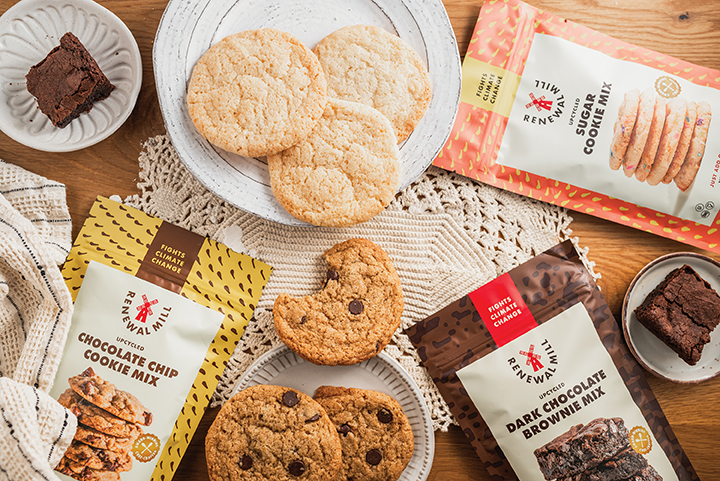
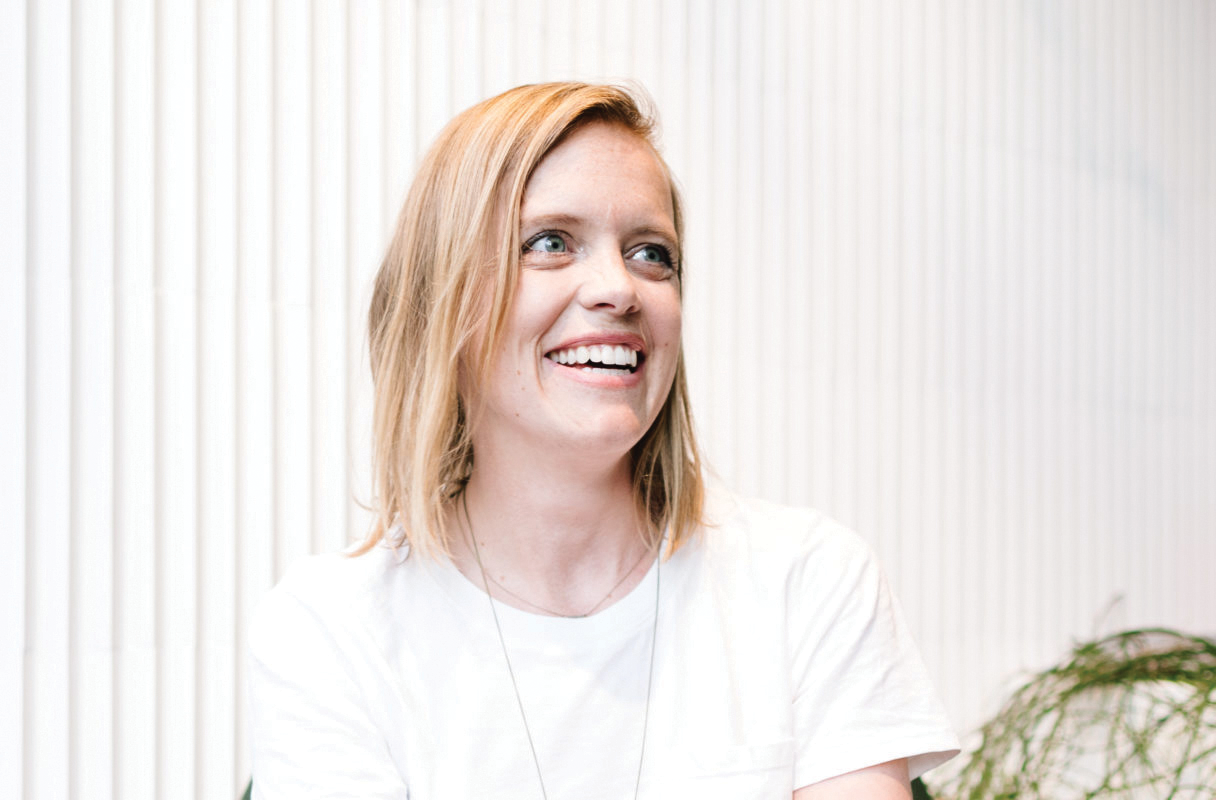
Claire Schlemme, co-founder & CEO of Renewal Mill, leads a mission-driven brand turning upcycled food into delicious baking mixes—bringing the “waste not, want not” philosophy to life, one batch at a time. (Photos courtesy of Claire Schlemme/Renewal Mill)
A Cup You Can Eat
Jeannine Davison didn’t set out to create a food recycling business when she started her company, Amai, which makes edible cups. The name for the company comes from the Japanese word for “pleasant surprise,” and that’s what Davison — who spent most of her career working for the Japanese company Panasonic and had traveled to Japan several times — wanted customers to experience when they came upon cups that served as food as well as containers.
As Davison dug into the research on edible packaging, she realized the product needed more than novelty to make it successful, both in terms of its sales and its sustainability impact.
“Edible packaging really only can reach its full potential if people eat it,” Davison says. “If an edible cup is something that's kind of gimmicky, and somebody takes a bite and then chucks it, sure it's good for the environment, but it contributes to food waste.”
That realization prompted Davison and her team to come up with a plan to make the cups out of upcycled ingredients, thereby reducing the waste of both food and single-use containers.
With a taste described as similar to a waffle cone but not as sweet, Amai edible cups are made from brewers’ spent grain, oat milk byproducts and pea starch acquired from Midwest processors. The company devoted two years of research and development to ensure the cup would be watertight and heat resistant, Davison says.
Amai has begun expanding its market from household consumers to institutions through pilot projects with school districts in the San Francisco Bay Area. Those districts are under mandates to cut the use of single-use plastics and use more whole-grain ingredients in their lunch programs. Now students at some area schools are eating yogurt parfaits and tacos served in Amai cups.
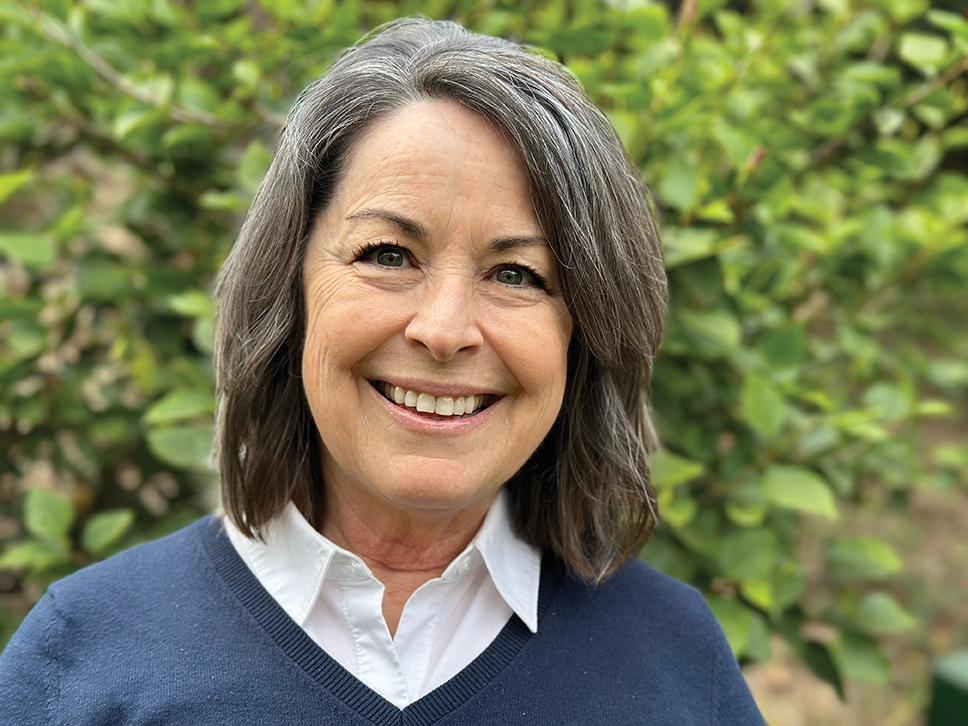
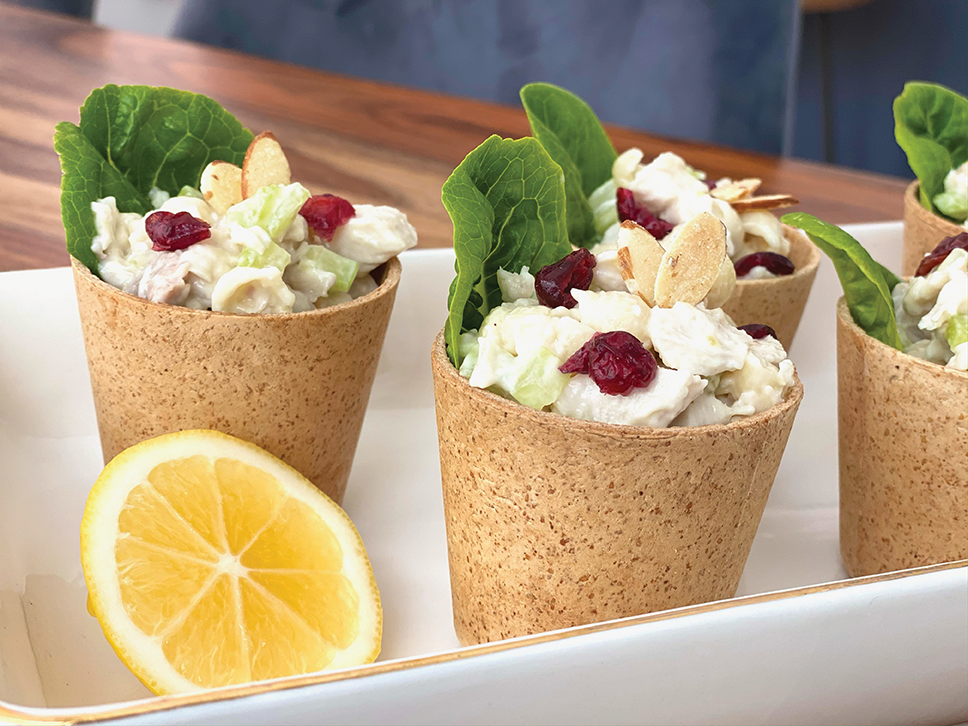
Jeannine Davison founded Amai, which makes edible cups that are similar to waffle cones but not as sweet. (Photos courtesy of Jeannine Davison/Amai)
Grandma’s Wisdom Meets Modern Sustainability
After earning a culinary school degree in front-of-the-house management, Eric Adams spent many years working in the Las Vegas hospitality industry. It was his grandmother who inspired his decision to attend culinary school, because he wanted to learn to cook like her. “She was a person that would create meals out of nothing,” Adams recalls.
Adams eventually landed a job at the Mandalay Bay Casino operated by MGM, which was known for having a robust sustainability program. But that career move occurred at a time when Las Vegas was still reeling from the Oct. 1, 2017, mass shooting.
That tragedy rocked the city’s bread-and-butter hospitality industry. Many restaurants were closing, forced to throw out massive amounts of food that they couldn’t redistribute or resell because of health regulations. Meanwhile, more waste was happening at restaurants still in business due to mistakes like overordering.
Adams, a pet lover, decided to parlay his restaurant industry knowledge and his connections with food distributors into a business that converts surplus human-grade food into consumable products for dogs. The company, called Dog & Whistle, makes a variety of premium treats and meal-toppers.
Recently, the company has pivoted from single-ingredient meat treats to snacks incorporating chickpeas, which are high in protein and fiber. The new product rollout will include a chicken cordon bleu flavor and a mint and blueberry option, which Adams says will also work as a doggy breath freshener. Adam’s own dog, Rocket, a Yorkie/Shih Tzu mix, tests every Dog & Whistle product before it hits the market. “He is the one that puts the final say on it,” Adams says.
As an African American who rarely sees others like him among his fellow UFA members or as official followers of the food upcycling movement, Adams says he wishes more made the connection he finally did between his ancestors’ forced resourcefulness and the practices that have become so popular today.
“I just thought back and was like, ‘Wait a minute, my grandmother was teaching me this this whole damn time,’” Adams says.
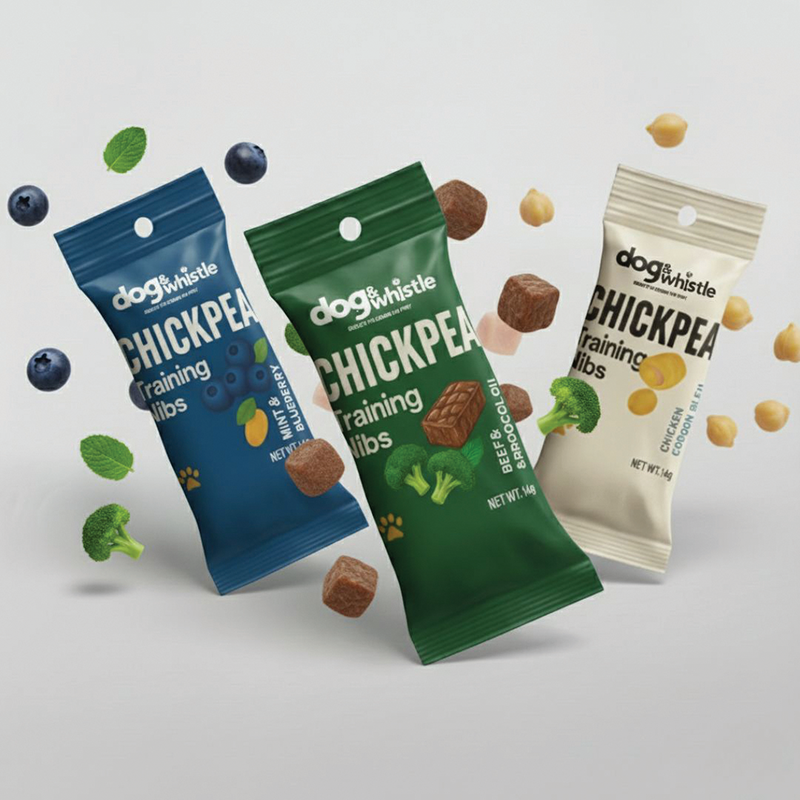
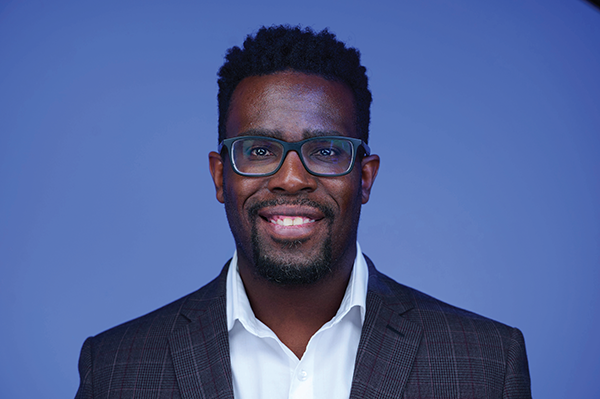
Eric Adams, founder of Dog & Whistle, crafts premium dog treats designed to keep tails wagging and standards high. (Photos courtesy of Eric Adams/Dog & Whistle)
Distilling a Waste Stream
Into Artisanal Spirits If you don’t know much about whey beyond what happened to Little Miss Muffet in the old nursery rhyme, Emily Darchuk has a lot to teach you. For those who are unfamiliar, whey is a byproduct of cheese production that is typically thrown away. For every 10 pounds of milk used to make cheese, 9 pounds of liquid whey are left behind, adding up to hundreds of billions of pounds annually, according to Darchuk.
As a food scientist frustrated by that inefficiency, Darchuk decided to transform the surplus into artisanal spirits, using whey in place of grain, grape or agave bases. Her company, Wheyward Spirit, uses a fermentation process that converts the nutrients in whey into alcohol.
“It upcycles, prevents the waste and all the issues,” Darchuk says, “but it also allows me to have differentiation and a distinctive approach, a more holistic approach, to our fermentation and distillation.”
The company’s product line includes the original, award-winning Wheyward Spirit and the newer, barrel-finished Wheyskey. The brand has garnered retail partnerships with stores like Whole Foods and Ben & Jerry’s. While many of its customers are motivated by their interest in sustainability, others are attracted to what Darchuk calls the “culinary freedom” it affords. “You can make any cocktail under the sun,” she says. “You can really play with it.”
Darchuk notes that while she works with sweet whey, another upcycling entrepreneur, Melissa Martinelli, is using the acid whey left over from Greek yogurt production to make a non-alcoholic drink called SuperFrau. “It's almost like a kombucha tonic health thing,” she explains.
The sound of the company’s name is meant to convey a double meaning. First, it signifies a distilled beverage made from whey. “But, it's also that wayward mentality to look at everything differently, from farm to flask, to be able to add value to all of our stakeholders and customers,” Darchuk says.
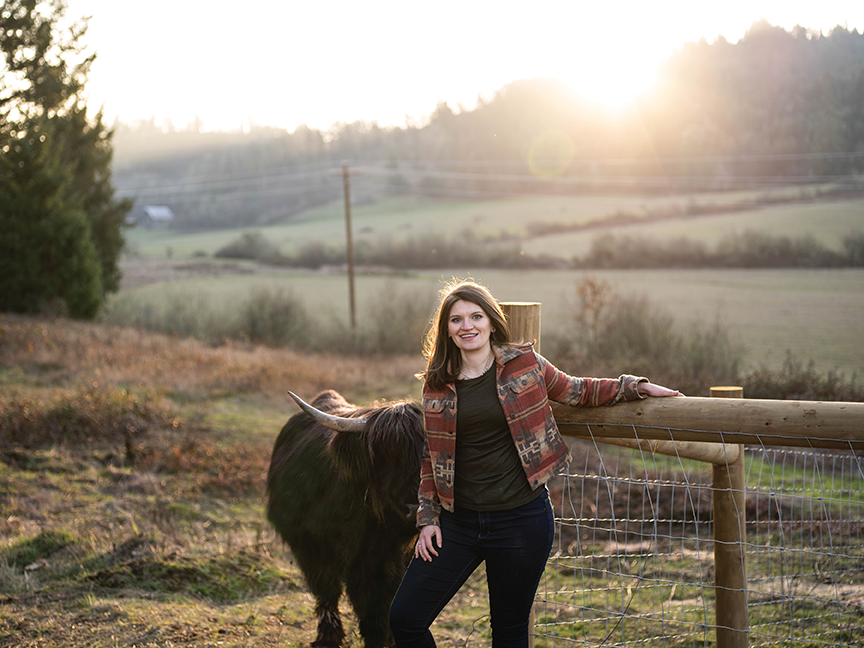
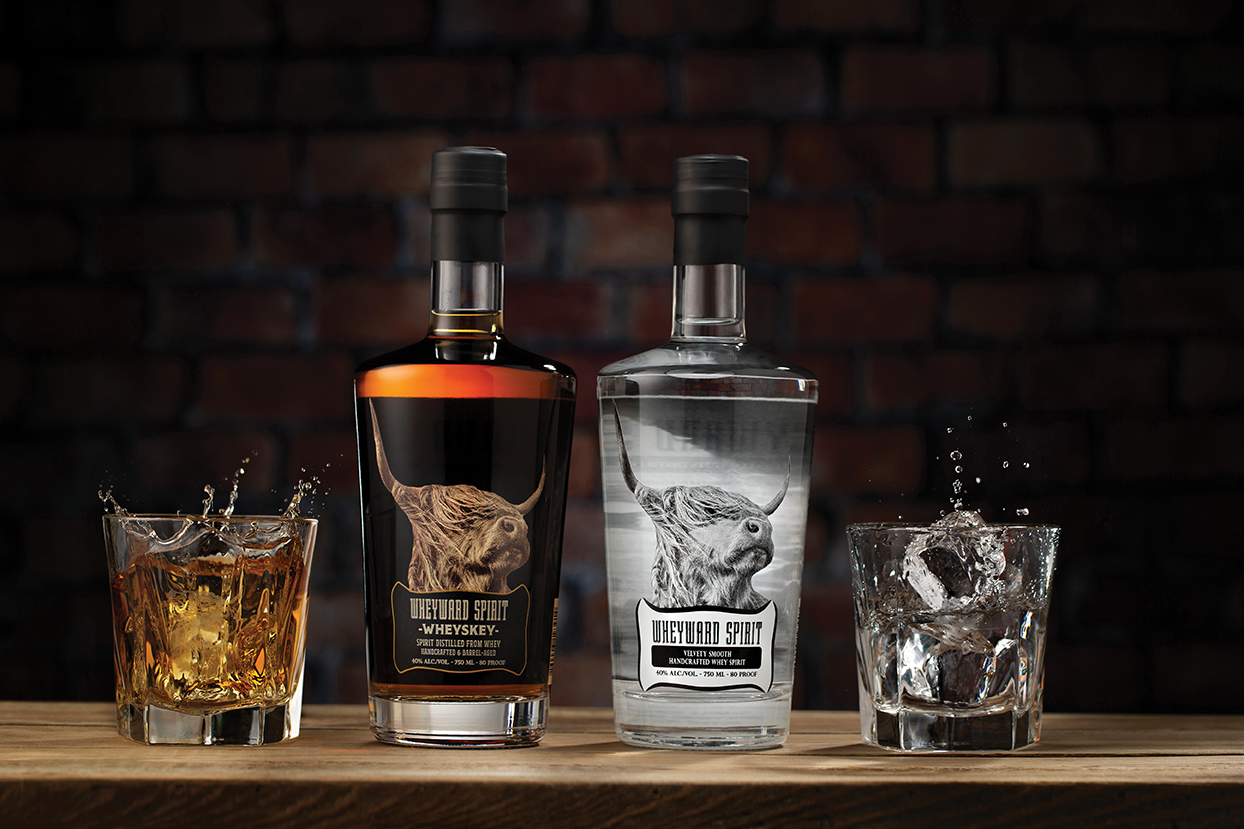
Emily Darchuk of Wheyward Spirit is behind Wheyward Wheyskey, transforming surplus whey into a bold, sustainable new take on craft spirits. (Photos: Left courtesy of Emily Darchuk; Right by Igor Kraguljac)
The Movement Matures
Food upcycling is transforming what was once viewed as waste into economic and social opportunity. It’s inspiring cross-sector creativity among chefs, scientists, engineers and educators. And it’s responding to the growing demands of conscientious consumers who want products that do good without sacrificing taste or affordability. Oenbring recalls that when the UFA first started, organizers were spending a lot of time explaining to people how much food waste was occurring and why it was a problem. Now that consumer awareness of the problem has heightened, many are ready to be part of the solution. Adams says that’s especially true of young consumers. “I think that the Gen Z years and the millennials have the opportunity to really push it and drive it forward, just because I think that we are more climate focused,” Adams says. Davison also sees technology playing a major role in the advancement of food upcycling, improving processes like food waste recovery and the logistics of transporting what’s salvaged before it spoils. She’s more optimistic now about where things are headed than she was even a year ago. “Instead of it being a movement, we're calling it now an industry,” Davison says. “That's a big shift.”