A Hop into the Future
New Mindy Kaling Theater Lab and other enhanced spaces bolster Dartmouth’s arts experiences
When the Hopkins Center for the Arts at Dartmouth
College opened its doors in 1962, it was one of the first major performing arts centers to be built on a university campus. Designed by Wallace Harrison, architect of Lincoln Center, the Hopkins Center was conceived as a cultural and community hub bringing together multiple disciplines under one roof. It’s mission: the cultivation of the arts as essential to life.
The center, known affectionately as “the Hop,” welcomed its first students in the midst of social upheaval and cultural change. These were some of the most pivotal years of the Civil Rights Movement, a decade that saw the Summer of Love, Woodstock and Andy Warhol’s soup cans for the first time. In 1965, just three years after the Hopkins Center opened, President Lyndon B. Johnson signed the National Foundation on the Arts and the Humanities Act, creating the National Endowment for the Arts and the National Endowment for the Humanities.

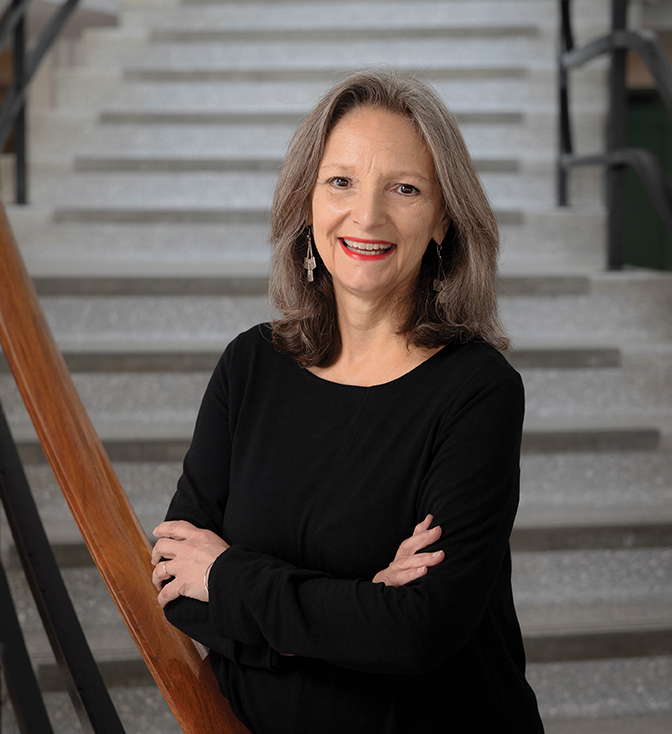
“The Hopkins Center was really part of an amazing cultural renaissance for our country in the mid-20th century,” says Mary Lou Aleskie, executive director of the Hop. “It was founded … with the ambition of establishing major cultural institutions for our country to build our American arts footprint … There was a lot happening [at that time] that was forging the clay for the future American culture.”
Now, some six decades later, at another transitional moment for arts and culture in the United States, Aleskie is celebrating a grand reopening of the Hop after more than five years of a staggering revitalization effort.
“We got to a point where the building was iconic, but was not contemporary in terms of art-making needs, [in terms] of our commitment to centering the arts in a liberal arts experience, fostering connection to rural community, and thinking about what community engagement and building looks like and the expansiveness of storytelling — particularly in our rural community,” she says.
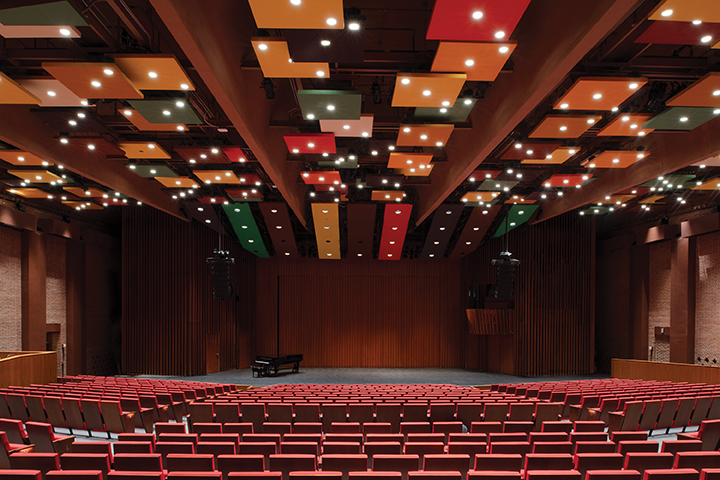
The revamped, reimagined Hopkins Center brings all of that back to the fore and in service of those goals includes a new 15,000-square-foot Daryl and Stephen Roth Wing, as well as a newly renovated Top of the Hop and Spaulding Auditorium, new Hodgson Family Dance Studio and revitalized jewelry, woodworking and ceramics studios, among other additions and improvements.
Perhaps one of the most anticipated parts of the re-enlivening of the Hopkins Center, however, is the creation of the Mindy Kaling Theater Lab, a gift from proud Dartmouth alum, Mindy Kaling, who credits her time as a theater major at the Hop as foundational for so much of her success as an actor, writer and producer.
LEFT: Mindy Kaling (Photo by Emily Shur); RIGHT: Mary Lou Aleskie (Photo by Robert C. Strong II)
“I loved my time at Dartmouth,” Kaling wrote in an Instagram post announcing the project. “It’s where I did, yes, improv, directed and acted in plays, made lifelong friends and fell in love with writing for the stage. It’s where I started thinking, ‘Maybe I could actually do this.’ Being able to give back in this way, to this place I loved so much, is an honor I will cherish and never take for granted. I hope this lab gives the next generation the space to try, to fail, to take risks and to invent the kind of work that hasn’t been seen before.”
Kaling envisioned the space as a launchpad and incubator where theater students can learn, create, experiment and come together, and it was with “great gratitude and pride,” says Aleskie, “that we received her gift as a woman of color who is successful in the industry and could be a role model for others.”
The state-of-the-art Mindy Kaling Theater Lab, “conceived to support independent student productions from conception to performance,” comes outfitted with a shock-absorbing sprung floor, lighting grid and professional sound system. Its creation is meant to foster community and collaboration, and will allow for the expansion of theater classes and give theater students de-siloed access to other arts disciplines, further enriching and enhancing their creative development.
“If you come into the Mindy Kaling and you think you’re there to do theater,” Aleskie says, “you [now] have the opportunity to have that work enhanced by all of the other students who are there for all the other disciplines, [all] on one floor.”
In October, to celebrate the start of this new era at the Hop, Dartmouth invited the community to take part in a star-studded, weekend-long celebration that included a world premier from cellist Yo-Yo Ma, a panel conversation between Kaling and Dartmouth alums, producer and author Shonda Rhimes and journalist Jake Tapper, as well as book talks, dance workshops, film screenings, alumni arts experiences and more.
At a time when funding for the arts in this country faces mounting threat, Darmouth’s investment in the future of the Hop sends an important, inspiring message not only to the campus and the Dartmouth community, but to the whole country — that the arts are vital to American life, and they are here to stay.
“The contract with our architects [for the revitalization of the Hop] was to be signed on the day we left our offices for COVID,” says Aleskie. “The trustees paused. They took a breath and said, ‘We have to move forward.’ And that attitude prevails. Every single day. And it will prevail long after this building opens. We are going nowhere,” she says. “And we are going to make the best of these times.”
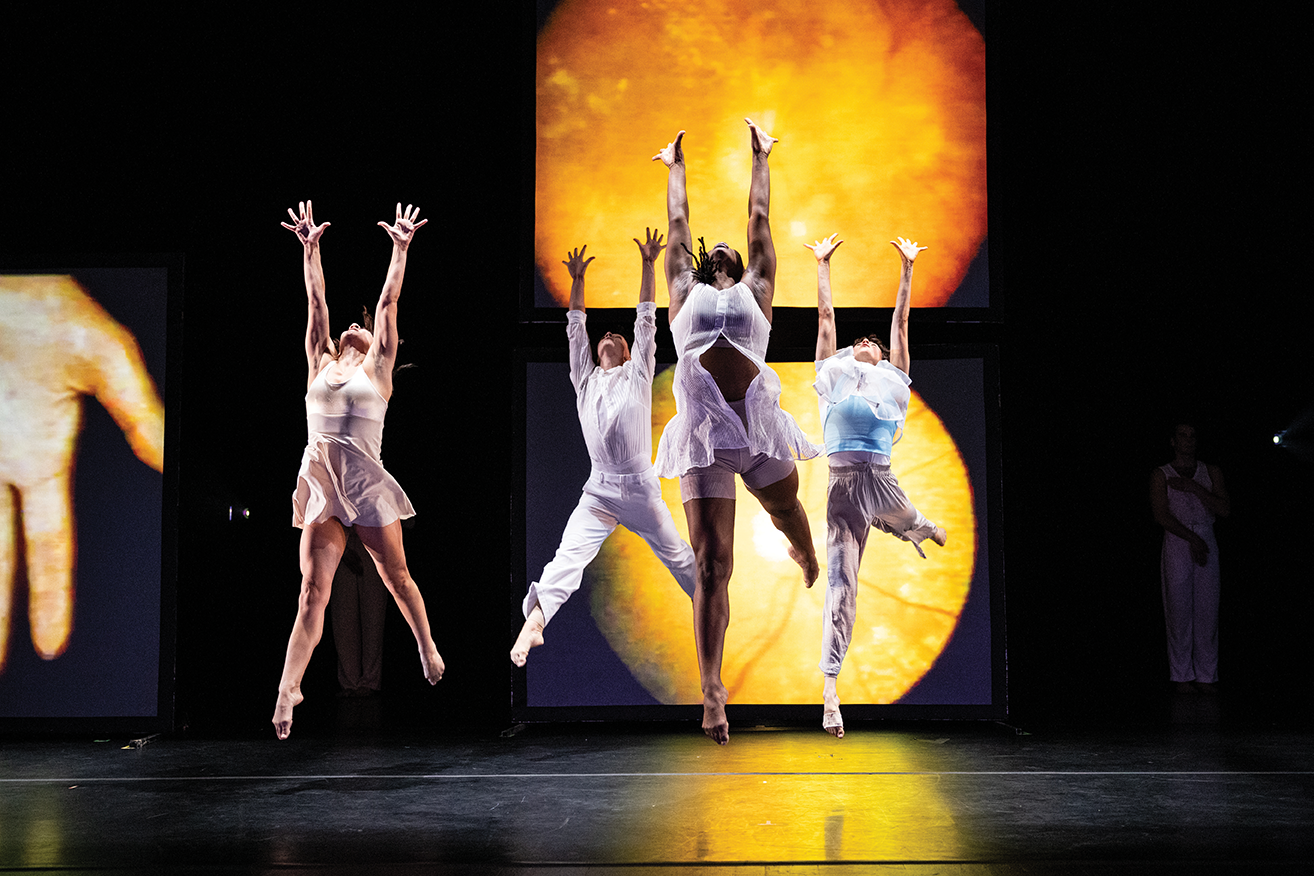
LEFT: The Hop's Spaulding Auditorium seats 792 for performing arts events. (Photo by Alexa Bendek) RIGHT: Dancers perform “Still/Here” with the Bill T. Jones/Arnie Zane Company. (Photo by Maria Baranova/Courtesy New York Live Arts)