

Hip-Hop & Wellness
When hip-hop lover Keith Tucker tried his first vegan meal, it was in the late 2000s at Seattle VegFest, an event promoting plant-based living, approximately 40 minutes outside his home in Tacoma, Washington. And to his surprise, the food he tasted was “really good,” he says, inspiring him to go on his own plant-based journey. At the time, Tucker was doing research for his radio show called “The Keith Tucker Show,” where he came up with the idea to interview people in hip-hop who were vegan — which “really opened up a whole new world for me,” he adds.
“I never knew that people in hip-hop culture were vegan,” says Tucker. “So, it just took off from there.”
Paired with inspiration from his radio show and his deep appreciation for hip-hop culture, on June 22, 2009, Tucker launched “Hip Hop is Green,” a nonprofit organization that uses hip-hop to promote healthy eating and wellness, along with environmental sustainability in communities of color. At the genesis of Hip Hop is Green, Tucker hosted Hip Hop Is Green Dinners to which he invited vegan emcees like artist and activist DJ Soyo and Black Stax — a music duo elevating Black art and culture — to perform before guests dined on healthy food. His first event took place in Seattle, eventually branching out to other cities on the West Coast, including Oakland, California, and Portland, Oregon.
“We would serve vegan food to young kids and families that never had a vegan meal before,” Tucker says.
Then after hosting several dinners with much success, Tucker decided to host dinners across the country — prompted by phone calls from people in hip-hop wanting an event in their own city. He was intrigued by Former First Lady Michelle Obama, who campaigned against childhood obesity through her public health initiative “Let’s Move!” Tucker was also aware of diseases and conditions prevalent in Black communities, like stroke, diabetes and heart attacks, and wanted to encourage healthy living.
So, in 2015, Tucker launched “The Hip-Hop is Green Tour,” a national campaign that served plant-based dinners to eight cities across the country. Raising $200,000, the tour was the first plant-based hip-hop tour in history, Tucker says, and included sponsors like Field Roast, a plant-based meat and cheese company whose products were served at the event. Approximately 10,000 meals were served on the tour overall, with guests totaling up to 1,000. But best of all, the meals were enjoyed at no cost to diners.
“I thought that it would be a good thing to offer that [the meals] free to our community,” Tucker says. Hip Hop is Green also works with chefs from Obama’s “Let’s Move!” initiative.
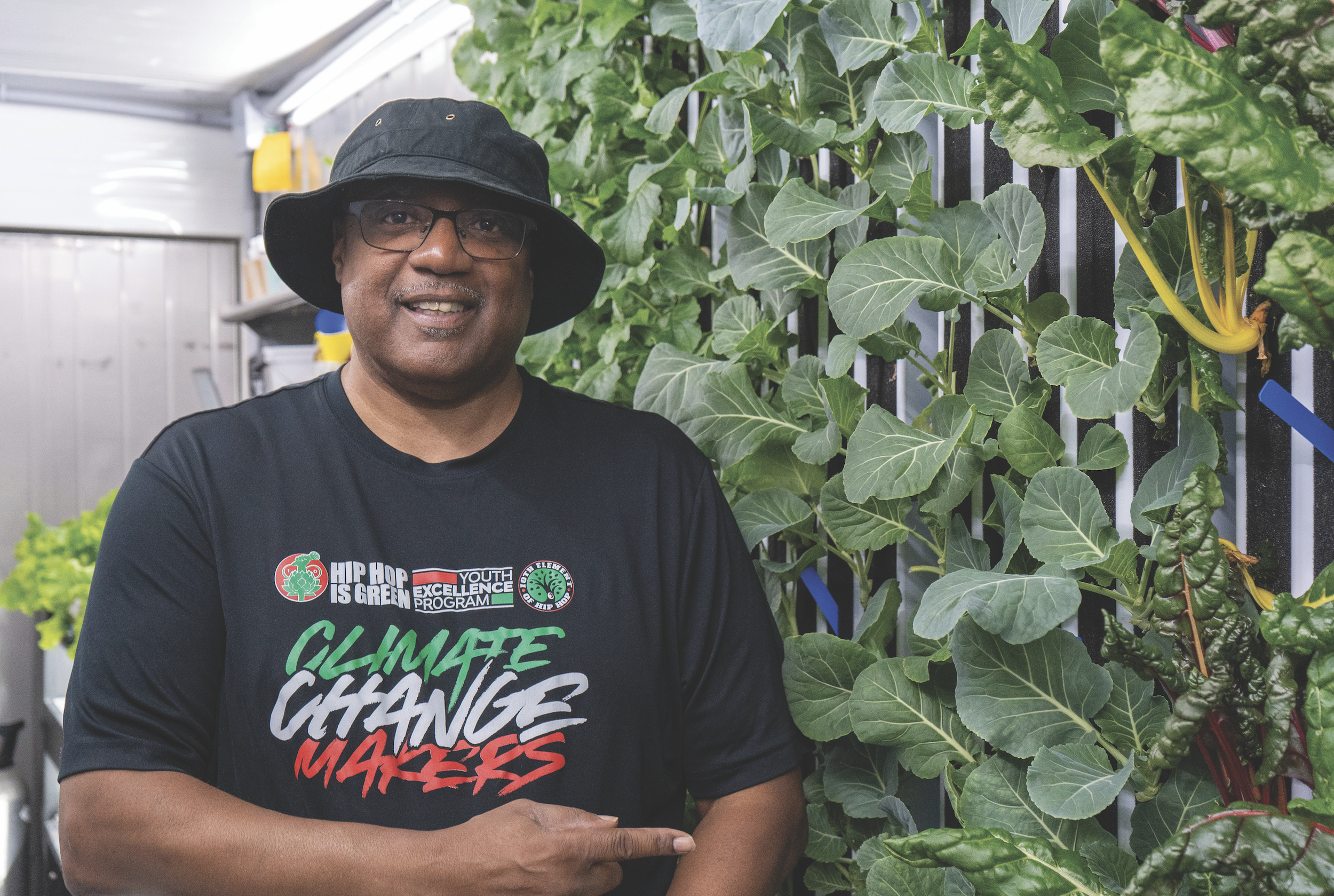
Keith Tucker created Hip Hop Is Green to promote sustainability and wellness.
(Courtesy of Hip Hop Is Green)
There’s Power in the Name
Having worked 45 jobs throughout his life, Tucker has always been an entrepreneur. In the late ’90s and 2000s, he sold electronics such as pagers to well-known entertainment companies like Def Jam, Universal Music Group and Slip-N-Slide Records, who broke artists like Jay-Z, Rick Ross, L.L. Cool J, and Trina, among many others. Tucker even had close ties to the famous, including R&B singer and “Fast and Furious” star Tyrese Gibson. Yet, through his several jobs and experiences, Tucker eventually found his real life purpose — promoting healthy eating to communities all over the country.
The idea behind Hip Hop is Green has great meaning in itself. During an interview Tucker had with Van Jones, his guest said a quote that stayed with him: “If hip-hop moves in a green direction, the world will move in a green direction.” Tucker, who partially disagreed with the quote, thought that hip-hop was already green, and incorporated that phrase in the name of his organization.
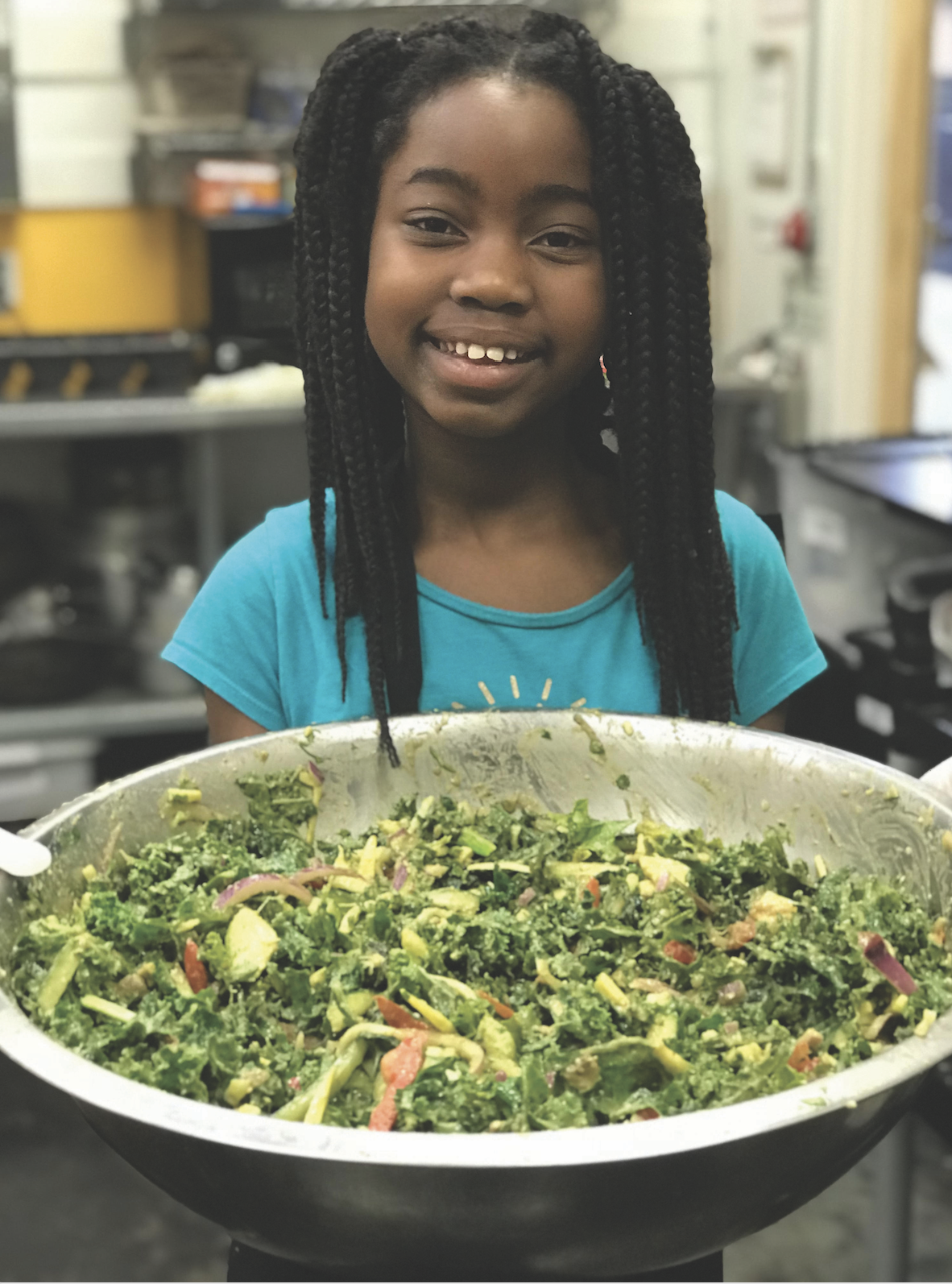
Communities of color are introduced to vegan meals.
(Courtesy of Hip Hop Is Green)
Hip-Hop is Green is a “declaration to the world to let people know that hip-hop is about environmentalism,” Tucker says. “Hip-hop is about health and wellness. Our organization is the total alternative to what you would see in the mainstream media right now when it comes to how hip-hop is portrayed and how it looks,” which Tucker says is often in a negative and violent way and “basically out of our control.”
“The music is weaponized,” Tucker says. “The images are weaponized. The food that’s put in our community is weaponized. We’re in a whole toxic environment that creates more toxicity. So, we have to remove ourselves from the toxic
environment and come back to where we were before. Get your hands in dirt. Get out
in nature.”
Statistics prove that communities of color are not only more prone to certain diseases but also have a lack of access to healthy food — and food in general. Per data from the U.S. Department of Agriculture, more than 9 million Black people could not access food to live a healthy lifestyle, Feeding America notes. Further troubling, one in four Black children in 2023 did not have reliable access to food. Systemic barriers that prevent access to healthy food include racism and discrimination, low wages, unemployment and food deserts present in many Black communities.
Through education, advocacy and access, Hip Hop is Green is trying to change that. Research shows that implementing a plant-based diet has many benefits, including reducing inflammation and lowering risk for heart disease, colorectal cancer and diabetes. Plant-based eating also has a lower environmental impact from reduced water usage and greenhouse gas emissions compared to meat diets.
While Tucker says he enjoys vegan food, he admits he was nervous about other people liking it during his first Hip Hop is Green Dinner event, with him noting that many Black people have never experienced vegan food before. To make the meals appealing and appetizing, Tucker “made sure that the food was close to what people already eat,” he says. This includes vegan tacos and his own custom burger made with a vegan burger and vegan hot sausage called the “Tupac Burger.”
“Everybody really liked it,” Tucker says of the Tupac burger. “Tupac used to wear a bandana on his head. I …put a burger wrap, made a bandana and put the bandana on all of the burgers.” Tucker’s vegan sloppy joes are another specialty.
Throughout the years, Hip Hop is Green has served vegan meals at hundreds of events. And despite his initial fear, people loved the food — with children, parents and grandparents coming up to Tucker to share just how much they enjoy it. Even Tucker’s own granddaughter is now vegan. The impact of his work continues from his first event, which Tucker holds close to his heart.
“I’ve been to thousands of hip-hop events in my life, and I never had a feeling as good as I had at the first Hip Hop is Green Dinner,” Tucker says.
“It was a special feeling and energy in the air, and that’s what really got me hooked on it — that, you know, I could really change lives.”
The Tenth Element of Hip-Hop
Since launching Hip Hop is Green, Tucker has acquired several accolades, including a Washington State Jefferson Award granted to him in 2015 for making a difference in the community through service. He’s also been recognized by the Washington State African American Achievement Awards, an annual event celebrating Black excellence, leadership and service. While Tucker says he’s thankful for these recognitions, there’s another major accomplishment he’s proud of — creating a 10th element of hip-hop — health and wellness. This venture took a team effort, with hip-hop legends working by his side. Gathering at the White House, Tucker met with famed emcees Doug E.Fresh and Easy A.D. of the Cold Crush Brothers to discuss the launch. Even Stic of the 1996 music political hip-hop group dead prez helped Tucker produce the event.
“I was thinking about doing it in the South Bronx, where hip-hop first was created — but I was like, ‘You know what, that’s already a special place,’” Tucker says. “‘I want to have the 10th element of hip-hop have its own special place.’”
On April 21, 2016, a ceremony celebrating the 10th element of hip-hop took place at Tucker’s “special place,” — the Schomburg Center for Research in Black Culture in Harlem, New York. The event attracted locals and people who came from around the country. Rapper and The LOX member Styles P., along with Queen Afua, a holistic and wellness coach in Brooklyn, were granted awards.
Tucker says society is currently in the “green age of hip-hop,” a movement straying away from violence of rap culture and embracing well-being. This includes embracing pillars of the 10th health and wellness element, such as plant-based eating, organic gardening, animal rights, environmental justice, mental health and sobriety.
The work of Tucker and other changemakers across the U.S. is undoubtedly having a positive influence in communities of color. In fact, the amount of Black vegans is growing. According to a 2022 video by the American Heart Association, Black Americans are the fastest growing vegan demographic in the country.
Another major goal of Hip Hop is Green is to teach children about climate change, with over 400 children having graduated from its educational program. Tucker, whose grandparents were farmers, wants to create more farms across the nation — in addition to Cherry Street Farm, a farm and lab based in the Central District of Seattle that teaches youth of color different farming methods and connects them with traditions of Black farmers. His work continues as his new initiatives inspire the next generations of youth who hold the planet — and their health — in their hands.
“Hip-hop culture is the most powerful culture on planet Earth,” Tucker says. “It is represented in every country, in every young people’s community on this planet. We’re going to move hip-hop in a green direction — in a whole new direction. That’s what we do.”